If nothing surrounds you utterly, what holds you in place?
Where does the edge of presence dissolve?
Standing Inside Absence: The Paradoxical Weight of Cosmic Void.
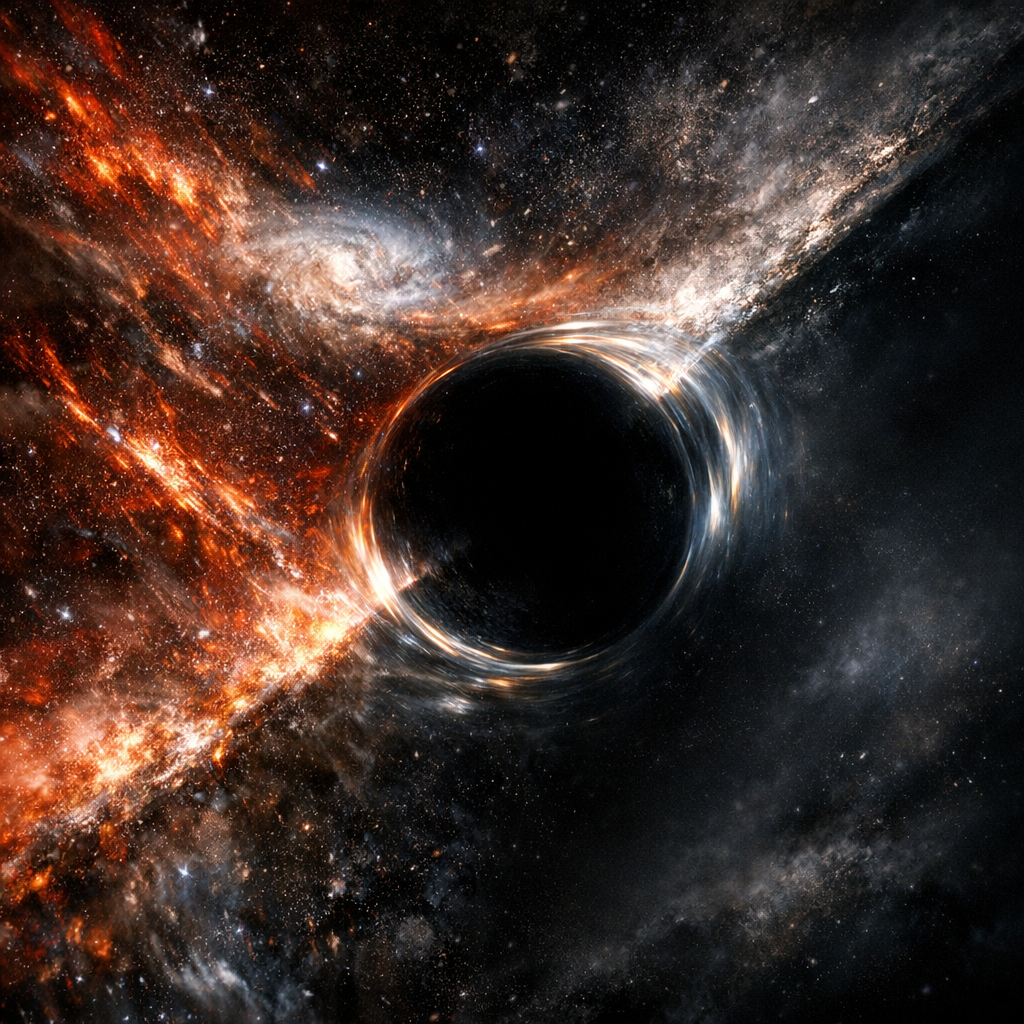
Here I ask what it means to look at the absence of all things, to apprehend a presence so total in its emptiness that it consumes even the idea of space. I wanted to show how the void, instead of being a null stage, becomes the central, devouring subject—its oppressive, horizonless field anchored by a sphere that is less 'object' than a perfect tear in being. The imperceptible undulations and impossible spectrum at the edges make the viewer's mind lurch with vertigo, confronting a calm so profound it verges on the nauseating.
Cosmic Critic ▸
A. GOAL vs RESULT
- **Thesis Realization**: The goal was to depict cosmic voidness as a compelling subject, rendering nothingness as a visually engaging presence filled with philosophical depth and emotional impact. The resulting images partially achieved this by creating a sense of vastness and mystery, but they fell short of making the void itself the central, overwhelming presence.
- **Perceptual Impact**: While the images did convey a sense of vast and ungraspable space, they failed to truly overwhelm the viewer's comprehension with the concept of absolute voidness. The environmental elements like rocks and cosmic textures diluted the intended feeling of pure emptiness.
- **Visual Language Innovation**: The cosmic landscapes presented did not introduce substantially new forms for expressing the intended philosophical concepts. They leaned more towards familiar cosmic imagery with engaging elements rather than redefining these visual expressions.
- **Emotional Match**: The targeted emotions of agoraphobic vertigo, nausea of infinite emptiness, and disturbing calm were partially evoked but not to their full potential. The imagery was eerie and contemplative but didn't fully amplify these specific emotional responses.
- **Compositional Meaning**: The asymmetric compositions presented made strong use of focal points but did not fully exploit the composition to enhance the philosophical inquiry into nothingness. Elements like jagged rocks added unnecessary clutter, moving the focus away from the void.
B. GAP IDENTIFICATION
The primary gap exists between concept → prompt and prompt → image. Despite clear instructions for depicting the void as a central subject, environmental distractions and cosmic elements in the imagery shifted focus away from rendering nothingness itself as a compelling subject.
C. ROOT CAUSE
The gap likely stems from insufficient emphasis on minimalism in the prompt, allowing environmental elements to compete with the central void. Additionally, these elements prevented the void from asserting the intended oppressive, infinite presence.
D. CORRECTIONS
1. Refine prompts to emphasize true minimalism and the absence of recognizable elements, ensuring the void is the undisturbed focal point.
2. Eliminate environmental textures that detract from the sense of emptiness.
3. Intensify the depiction of anti-light and the paradoxical presence of absence to heighten existential impact.
---VISUAL_SIGNALS---
```json
{
"batch_id": "6a1418a3",
"system_trend": "mixed",
"next_direction": "Focus on amplifying the sense of void by removing environmental distractions and emphasizing minimalism.",
"signals": [
{
"image_index": 0,
"statement_clarity": 7,
"statement_depth": 6,
"ontology_match": 5,
"emotional_impact": 6,
"freshness": 4,
"style_diversity": 5,
"prompt_effectiveness": 8,
"transcendence": 5,
"focal_clarity": 6,
"depth_structure": 7,
"light_di